The Equity Illusion — Why Your Equity Compensation Isn't Retaining Anyone

Manish Prayaga
Founder, terraledge
Startups and scale-ups in the UK align their growth with the growth of their employees through attractive equity compensation packages. A lot goes into structuring EMI schemes, RSU grants, four-year vesting schedules, etc, as these are the components that have proven to attract and retain good talent.
However, offering just these components is no longer enough. Employees are starting to find these instruments confusing as it creates complications for their personal and professional financial goals. Employees feel a lack of clarity around tax position on vest, whether to sell or hold, how it fits with their mortgage, their ISA, their pension.... and more. So the equity offering that is intended to retain and engage an employee can instead create an element of dissatisfaction.
How Equity Dissatisfaction Begins...
You might think your startup’s star Senior Engineer with a £140k base, £80k of RSUs vesting over four years, along with additional perks and benefits, is more than satisfied in their position. But when a better, more transparent equity offer lands in their inbox, they see it as a way out from dealing with the complications of their current compensation.
On paper, the numbers seem attractive – but in reality, your Senior Engineer lacks the practical support needed to utilise their equity to achieve their goals. It is reported that fewer than half of equity plan participants report receiving education (46%) or advice (41%) about their equity awards. All HR efforts at educating their employees fall flat because they’re neither current nor contextual. Webinars, EAPs, and content libraries talk of equity in elusive terms, while equity plan administrators focus solely on compliance, not financial planning.
This lack of understanding is a concern for employees, but even more so for you, as the HR and People’s function. Missing knowledge leads to lower satisfaction and a general disconnect with their purpose at the company, hampering overall organisational culture. 57% of employees stated that companies are not doing enough to educate employees about equity – you don’t want to be a part of this statistic.
Why is Equity so Confusing?
A survey revealed that nearly half of all employees don't understand their compensation, emphasising that equity is the most confusing part of one’s package. For many employees, confusion becomes inaction: nearly one in five simply don’t know how to exercise or sell, while 30% avoid acting because of tax uncertainty.
Startup employees are constantly worried about how the organisation's valuation in the next round of funding would affect the value of their equity.
In the UK, where RSUs are taxed as income on vest – not as capital gains, their value becomes an even greater mystery to make sense of. Let’s use this example - after taxes, an employee receiving RSUs worth £50,000 is left with just £22,705. And if RSUs push total income above £100,000, the employee can face an effective 60% tax rate. Evidently, taxes leave employees with a fraction of the total value of their equity, making their original RSUs seem overstated and exaggerated. This causes an unanticipated dissatisfaction, eroding trust in their organisation.
The key to ensuring this doesn't occur is making information transparent, understandable, and contextual. Personalisation is one way to achieve that. Employees who received personalised advice reported ‘feeling good’ about their financial situation at a rate of 80%, compared to just 58% of those who did not receive advice. Employees who incorporate their RSUs and EMIs into the broader financial picture and receive holistic advice increase their perceived value of those awards by 2-3 times.
How you can make Equity Attractive again
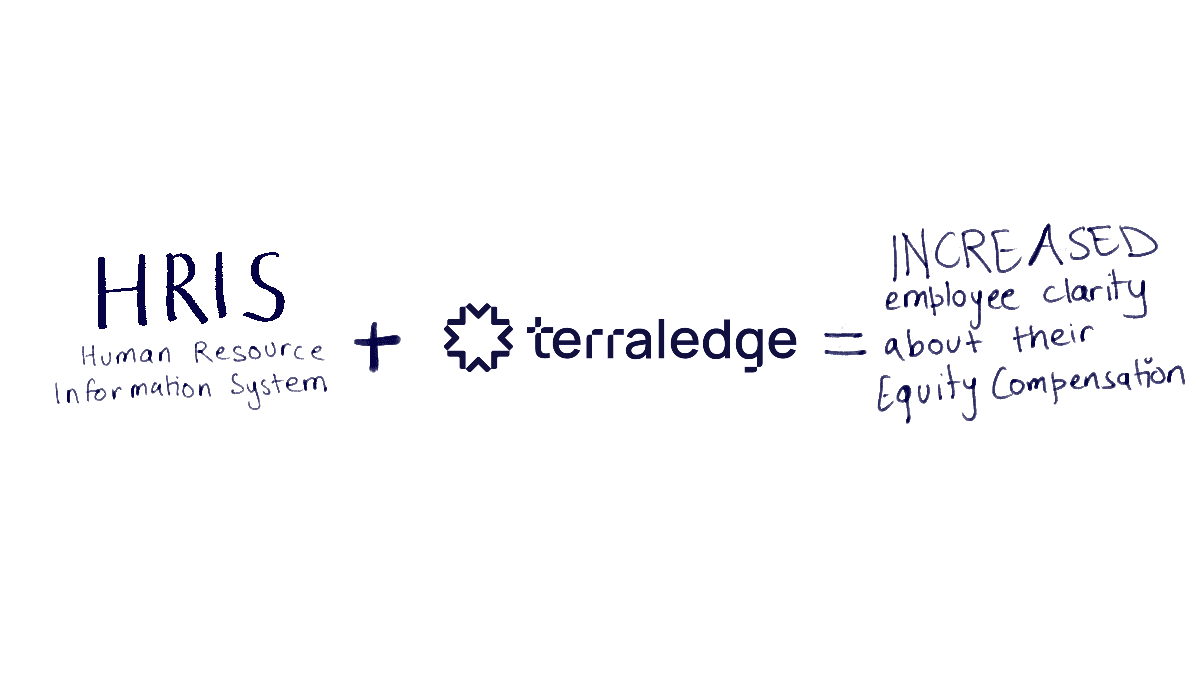
As a startup with a lean workforce, your employees are your biggest asset. Their well-being is your responsibility. And to ensure that, your task is to close the distance between the equity offered and the information on how to utilise it. To put it practically, the HRIS (which has the complete compensation data — salary,EMIs, RSU grants, vesting schedule) needs to be connected to the employee's personal financial life (pension, ISA, mortgage, savings) - this is exactly what terraledge helps you achieve.
Filling that gap conveys real, actionable value to your employees, while also making your work far easier. Studies have shown that the perceived value of equity stood at only 39% when employees received neither education nor personalised advice. With education, it rose to 54%, and with personalised advice to 58%. terraledge is the personalised guidance that improves the retention value of equity, giving employees a single view that puts it in context of everything else. So, when they ask the question "Should I sell on vest?" They have an answer that's specific to them, not a generic AI response from a tool that knows nothing about them.
Equity is most valuable to both the startup and the employee when utilised to its intended purpose. terraledge helps make Equity utilisation easier and more efficient for you and your employees.